
Introduction
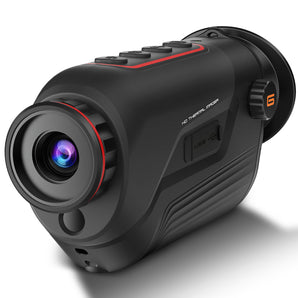
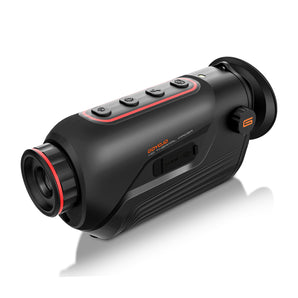
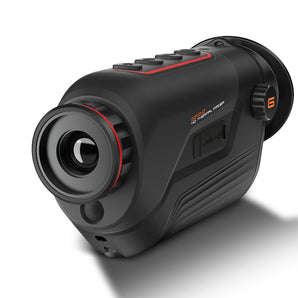
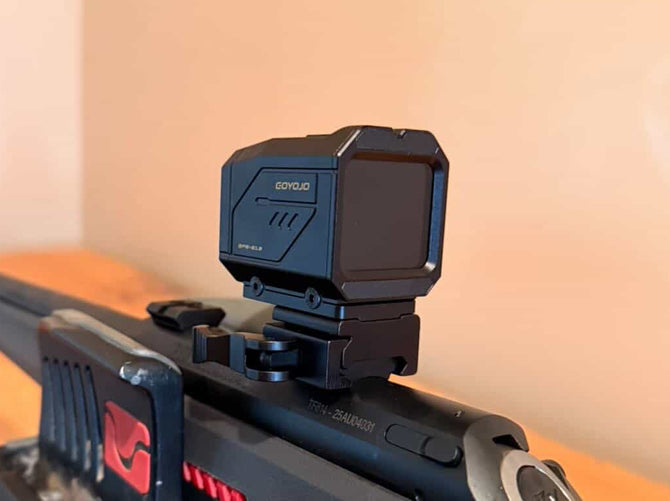
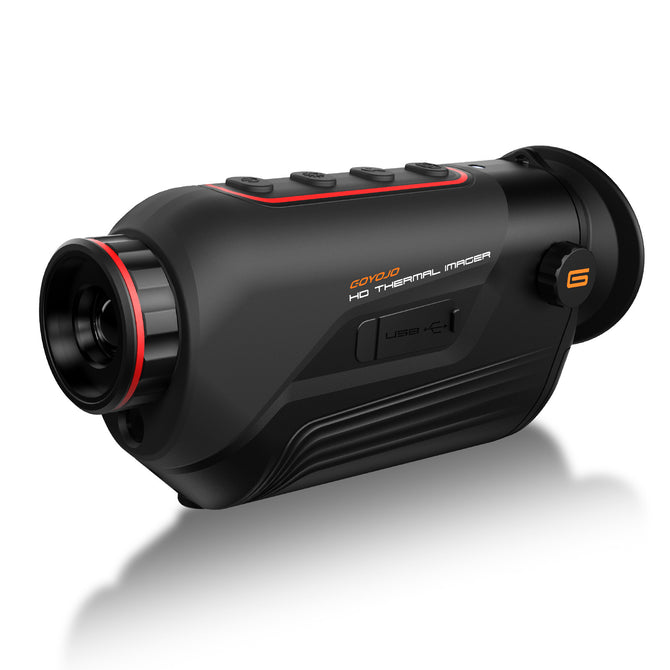
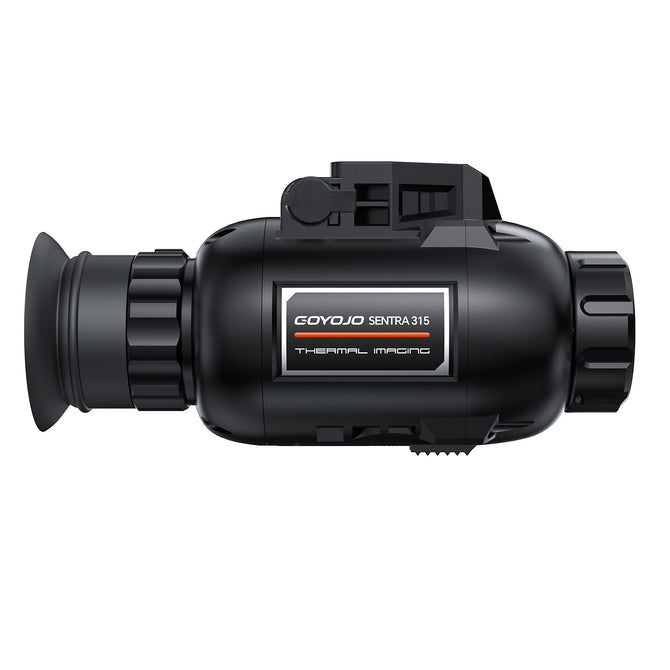
The GOYOJO GRS225RF is a budget-friendly thermal scope designed for hunters who want more than basic heat detection. Its standout features include an integrated laser rangefinder, one-shot zero, onboard recording, app connectivity, and a familiar riflescope-style design.
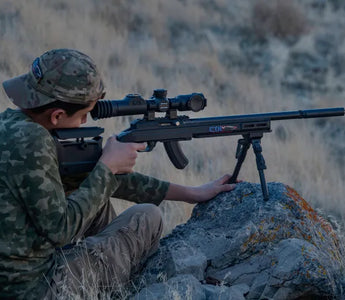
This guide interprets an independent Coldboremiracle review of the GRS225RF and compares those field observations with GOYOJO's current product information. . The reviewer tested the scope’s zeroing process, rangefinder, controls, recording features, mobile app, and thermal performance on both rimfire and centerfire rifle setups. (GOYOJO did not conduct the independent field test.)
The GRS225RF is best suited to predator control, hog hunting, food plots, wooded properties, and smaller fields where most opportunities occur at practical close- to mid-range distances. It combines a 256×192 thermal sensor with a smooth 50Hz refresh rate, a high-resolution OLED display, an integrated laser rangefinder, and recording tools, giving hunters a practical all-in-one setup for these environments.
If you value an integrated LRF and recording tools more than long-range image detail, the GRS225RF offers a compelling balance of features and price. Hunters who regularly scan large open fields should consider a higher-resolution model.

What Independent Testing Found
An independent Coldboremiracle field review covered setup on a custom Ruger 10/22, menu and app use, recording, rangefinding, and a later 100-yard zero on a 20-inch .223 Desert Tech MDRX. The most useful buying takeaways were straightforward:
- One-shot zero was easy to learn. The reviewer froze the thermal image after a shot and moved the reticle from the point of aim to the warm impact.
- The laser rangefinder was practical in the field. A recorded clip showed a 332-foot reading, although this was not a controlled maximum-range test.
- Thermal contrast mattered more than a headline distance. Warm, moving animals and sun-warmed rocks against cold ground were easier to interpret than objects close to the background temperature.
- Recording and phone connectivity worked. The reviewer used the IR-Tracker V app for live viewing, controls, and media downloads.
- The feature set stood out for the price category. Menus took time to learn, but customization became easier once the control layout was familiar.

Image Quality and Practical Hunting Range
The GRS225RF uses a 256×192 thermal sensor and displays the processed image on a 1440×1080 OLED. Those numbers describe two different parts of the system. The thermal sensor determines how much real heat detail the optic captures. The higher-resolution OLED makes menus, reticles, and the available image look clean to your eye, but it cannot create detail the sensor never recorded.
That distinction becomes important when discussing range. Detection means noticing a heat source. Recognition means judging its general class, such as an animal rather than a rock. Identification means seeing enough detail to make a confident, responsible target decision. GOYOJO lists a long detection figure for a human-sized target, but that should not be treated as an animal identification range.

Digital zoom enlarges the existing pixels; it does not add true target detail. Lower zoom settings are therefore the most useful for scanning, while higher settings can help with framing but will look increasingly pixelated. In the independent review, the scope supported a 100-yard centerfire zero, showed temperature-contrasted targets and impacts, and returned the noted 332-foot LRF reading. Those observations reflect that session's targets, weather, and terrain rather than a guaranteed limit for every hunt.
In practical terms, this is best viewed as a close- to mid-range thermal scope. It makes the most sense in timber edges, brush, food plots, farm lanes, and small fields where you can close distance and confirm the target. For repeated long-range identification across wide, open ground, more native resolution is the better investment.
Features That Matter in the Field
Laser Rangefinder and One-Shot Zero
A thermal scope with a laser rangefinder removes a common source of guesswork at night. The LRF gives you an immediate distance reference without requiring a separate handheld unit. The review did not establish its maximum range or accuracy, but the documented 332-foot reading shows how the feature can fit into a real shooting sequence.
The freeze-frame one-shot zero is equally useful. After firing, you freeze the image, keep the original point of aim visible, and move the reticle to the observed impact. The reviewer described the process as intuitive and repeated it when moving the optic to the .223 rifle.

Recording, Storage, and Mobile App
The scope can capture photos and video, including recoil-activated recording, and GOYOJO lists 32GB of onboard storage. That makes it easier to save a shot sequence without reaching for another camera. The IR-Tracker V app mirrors the display and provides access to selected recording, zoom, palette, and reticle controls. The reviewer successfully downloaded media through the app, though some video files took extra work to place into an editing-friendly format.
Controls and Battery Life
Major commands sit on the keypad above the eyepiece, while a rotating and press-to-select top dial handles menu navigation. There are plenty of options, so expect a short learning period before your first hunt. Once learned, the layout offers fast access to ranging, recording, palettes, reticles, profiles, and picture-in-picture.

GOYOJO lists up to 7.9 hours of operating time using the scope's battery system. The independent review did not run a controlled battery test, so plan around temperature, Wi-Fi use, recording, and your hunt duration. Charging before the hunt and carrying the supported backup cell remains the practical approach.
What Could Be Better
- Long-range identification detail is limited. The 256×192 sensor is useful at realistic hunting distances, but small features become harder to resolve as range increases.
- Heavy digital zoom looks pixelated. It enlarges the captured image rather than adding new thermal information.
- The menu system takes practice. The number of features is a benefit after setup, but new thermal users should learn profiles, palettes, and recording controls before hunting.
- Video editing may require an extra step. The reviewer could download files through the app but had trouble getting some videos into a convenient editing format.
- Large open fields favor more native resolution. If distant target detail matters more than price or the GRS225RF feature mix, a 384×288 model is a better fit.

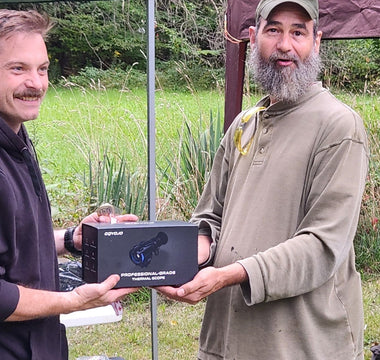
Image source: Coldboremiracle.
Who Should Buy the GRS225RF?
Best for
- Predator and hog hunters working wooded properties, food plots, farm lanes, and smaller fields.
- Hunters whose likely opportunities stay within practical close- to mid-range distances.
- First-time thermal buyers who want a capable budget thermal scope without giving up an integrated LRF.
- Users who value one-shot zero, onboard recording, app connectivity, and multiple display options.
- Anyone building a thermal scope for hog hunting or a thermal scope for coyote hunting around controlled, familiar terrain.

Image source: Coldboremiracle.
Consider the GRL335 if
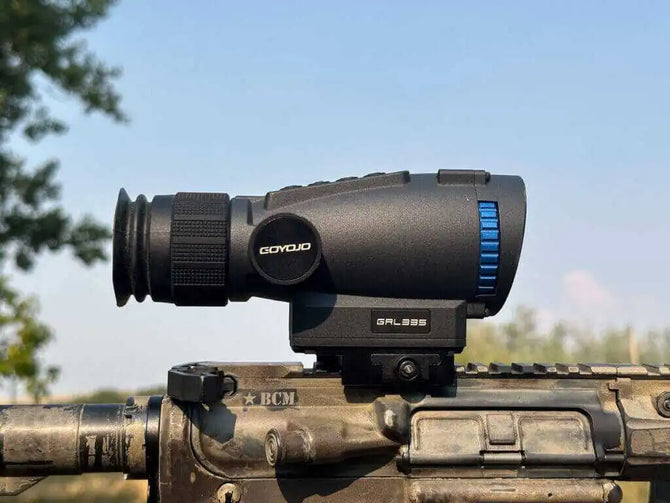
Move up to the GRL335 if you frequently scan broad agricultural fields, need more detail on smaller or more distant targets, or are willing to spend more for a 384×288 thermal sensor. The comparison below uses current GOYOJO product data and focuses only on the differences that matter most to this decision.
| Model | Sensor | Objective | Storage | Current Price |
|---|---|---|---|---|
| GRS225RF | 256×192 | 25mm | 32GB | $749 |
| GRL335 | 384×288 | 35mm | 64GB | $949 |
Compare the GRS225RF and GRL335
Final Verdict
The GOYOJO GRS225RF earns its place as a practical, feature-rich entry point into thermal hunting. Its integrated LRF, simple one-shot zero, recording tools, app access, and familiar control layout give you capabilities that are genuinely useful after dark. Coldboremiracle's field experience also supports the basic value proposition: the scope was workable at a documented 100-yard zero, its rangefinder provided a useful reading, and temperature-contrasted targets were easy to follow in that session.
The main limit is straightforward. A 256×192 thermal sensor cannot deliver the same distant identification detail as a higher-resolution optic, and digital zoom does not change that. For woods, food plots, small fields, hogs, coyotes, and other close- to mid-range work, the GRS225RF is a strong buy for hunters who prioritize features and value. For large open terrain, compare the GRL335 before deciding.
Explore GRS225RF Features or browse all GOYOJO thermal imaging optics.
Source Note: Independent field observations come from Coldboremiracle's GRS225RF review. Product specifications come from current GOYOJO information. Embedded review images are sourced from Coldboremiracle and remain the property of their respective copyright owner.