
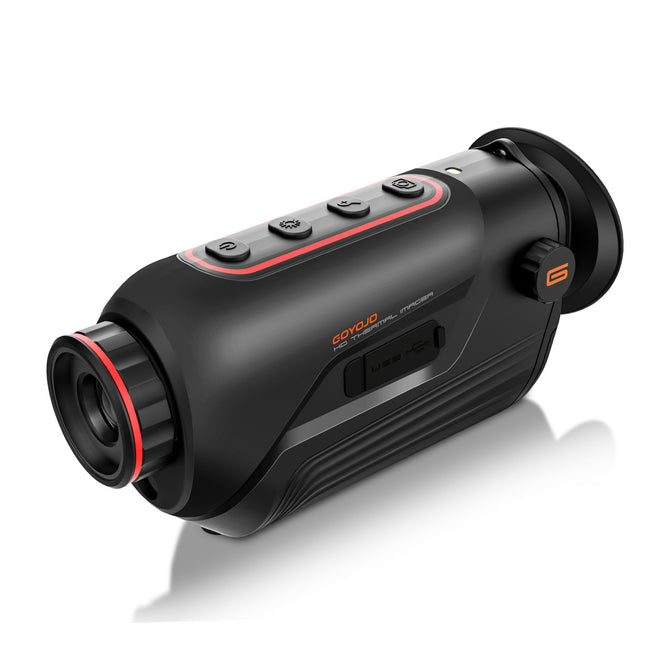
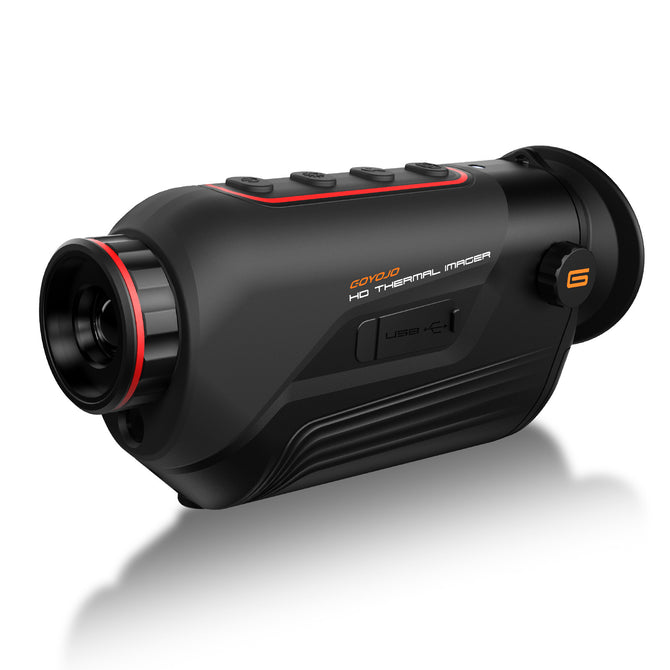
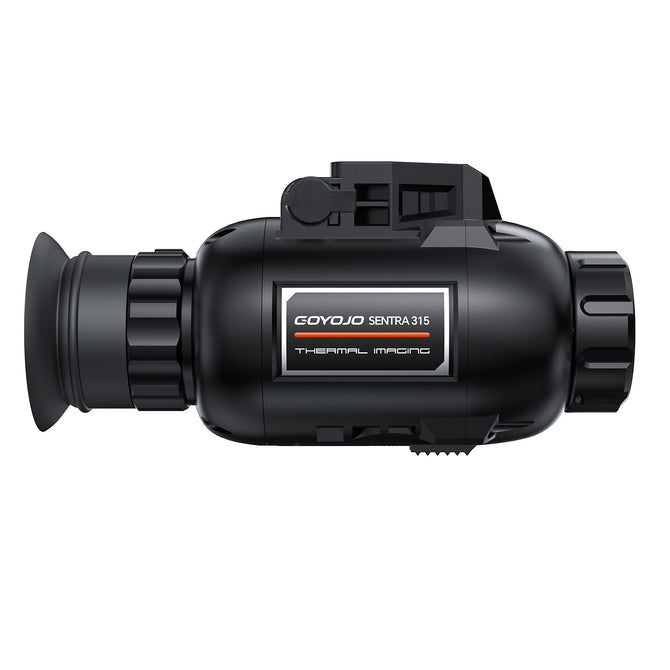
What This Missouri Coyote Test Asked of the GRL335
For a predator hunter, a thermal scope has to do more than put a heat signature on the screen. The real questions are practical: How quickly can you find an animal? At what distance does its shape become clear enough to identify? Does the optic stay zeroed after repeated hunts? And can you operate it easily when you're wearing gloves on a cold stand?
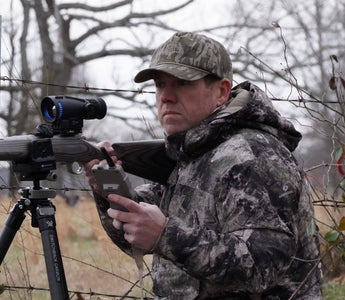
Those were the questions veteran predator hunter Heath Wood put to the GOYOJO GRL335 during his third-party review for North American Outdoorsman.
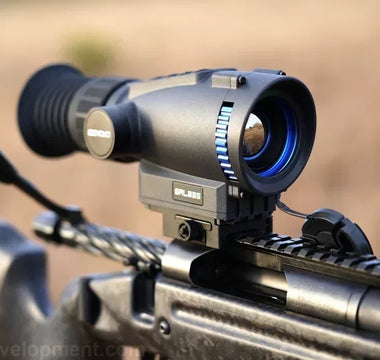
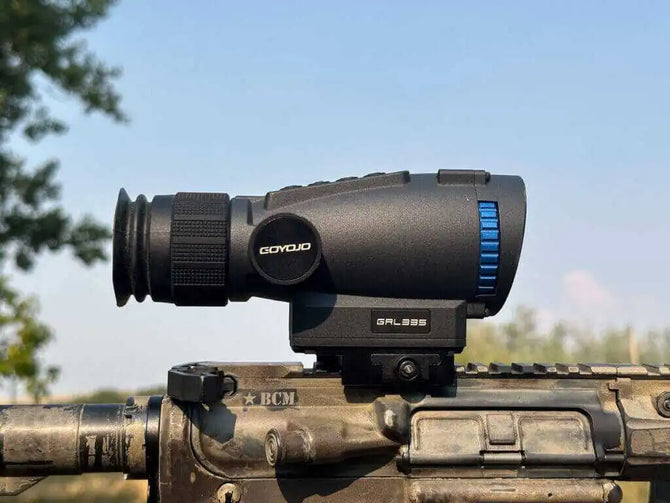
Wood mounted the GOYOJO GRL335 on a familiar Kimber .22-250, started at 50 yards, confirmed the setup at 100, and then carried it on four Missouri coyote hunts. His account covers open fields, timber edges, brush, knee-high grass, moving animals, and night temperatures mostly between the low 20s and 35°F. That sequence makes the review especially useful for hunters whose real opportunities are measured in farm fields and calling stands rather than specification-sheet maximums.

Quick Takeaways for First-Time Thermal Hunters
-
Detection: Coyotes were detected beyond 300 yards in open terrain.
Identification: The reviewer's comfortable positive-identification range was inside roughly 250 yards. - Zero: The optic was checked again after four hunts, with the setup reported to be holding zero.
-
Cold-weather use: Controls remained usable with gloves, and the optic lasted through the reviewer's full evening sessions in roughly 20–35°F conditions.
- Value: The reviewer considered the 384-class optic a credible entry point for hunters who want useful field performance without premium-thermal pricing.
Detection Beyond 300 Yards, Confident ID Inside 250
Wood’s distance observations are valuable because they describe three different decisions. Detection is noticing a heat source. Recognition is reading enough shape and movement to understand its general type. Identification is reaching the confidence needed to decide what the animal is. On multiple open-terrain stands, Wood reported detecting coyotes beyond 300 yards. In the country he normally hunts, however, the first pickup was more often between 100 and 200 yards.
His comfortable positive-identification window was inside 250 yards. That shorter number is not a contradiction; it is the useful distinction. A coyote can appear as heat at a longer distance before body shape, movement, terrain, and angle provide the detail needed for a confident call. For buyers comparing thermal optics, Wood’s experience suggests treating 300-plus-yard detection as an early-warning capability and the shorter identification band as the more relevant planning distance.
GOYOJO’s current human-size detection, recognition, and identification references use a different target and defined conditions. They provide product context, but Wood’s coyote observations are the better guide to what he actually encountered on Missouri stands.
Clear K9 Detail and Smooth Tracking Through Brush
The review’s strongest image-quality examples come from recognizable animals rather than test patterns. At 100 yards, Wood said whitetail deer, cattle, and a large owl in a tree were easy to identify. On his first coyote set, an animal moving through knee-high grass just beyond 150 yards showed a defined K9 body shape instead of appearing as an anonymous hot spot.
Movement remained useful when cover became more complicated. Wood described tracking animals through brush as smooth, with minimal perceived lag. On one cold, still stand, two coyotes approached from different directions. He could transition between them, keep the targets clear, and stay oriented as the situation developed. That combination—readable shape and fluid movement—matters more in a calling scenario than a static image alone.
Wood used white hot for scanning and preferred black hot for shooting, while noting that alternate palettes helped when humidity or background temperature reduced contrast. The practical benefit is flexibility: a hunter can choose the presentation that makes the target easiest to follow in the scene at hand.

A 50-Yard Zero That Held Through Four Hunts
Wood began on his backyard range, sighted at 50 yards, then moved to 100 yards and fired a three-shot group he described as consistent. More important to the article’s field sequence, he carried that setup on four separate hunts and later returned to the range. According to Wood, everything checked the same.
That is a straightforward and useful zero-retention result for the Kimber .22-250 configuration he used. It means the optic went from initial setup to range confirmation, through repeated transport and hunting, and back to the target without requiring him to rebuild the zero. For a predator hunter who wants to keep a familiar rifle in service across a season, that continuity is a meaningful part of the ownership experience.

Cold-Night Controls, Runtime, and Hunt Recording
Cold-Weather Controls
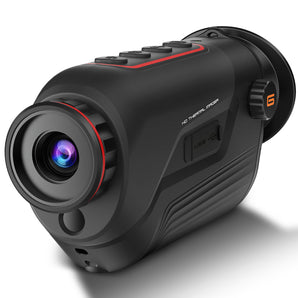
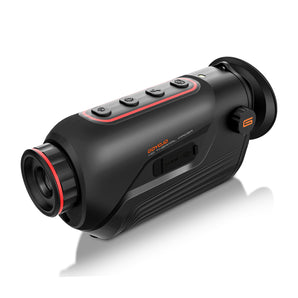
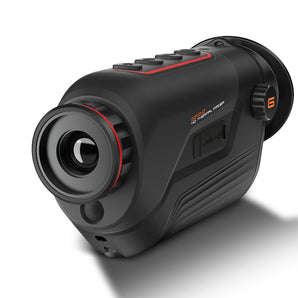
Cold-weather usability came through in several connected observations. Wood described the housing as solid and well sealed in feel, and he found the buttons easy to operate while wearing gloves. On a winter calling stand, that direct access matters: a control that can be found and pressed without breaking concentration helps the hunter react when an animal changes direction or a second heat signature appears.
Battery Performance
During nights mostly between the low 20s and 35°F, the GRL335 lasted through Wood’s full evening sessions without a battery swap. That is a practical session result rather than a fixed number of hours, but it answers the buyer question that mattered in his use: the optic stayed running for the complete hunts he described.
GOYOJO currently lists 6–8 hours of operating time under its product specifications. Actual runtime will vary with usage, recording, Wi-Fi, temperature, and other conditions, additionally, the replaceable battery design allows users to carry spare batteries.
Recording
Wood also used onboard recording rather than merely listing it as a feature.Capturing hunts let him preserve the action and review shot placement afterward. For hunters who study approaches, target movement, or their own timing, that turns recording into a field-learning tool as well as a way to share footage.

Digital Zoom vs. Native Detail: Where the GRL335 Fits
Wood found digital zoom useful inside 200 yards for confirming an animal and refining shot placement, while also reporting the expected loss of clarity as magnification increased. That observation gives the GRL335 a sensible operating pattern: use the native 4× view to find and follow the animal, then add zoom when the extra scale helps and the remaining detail still supports the decision.
He was equally clear that the GRL335 is a 384×288 optic, not a premium 640-resolution system. For his southern Missouri terrain and typical predator distances, the balance worked. Hunters covering much larger western fields may place more value on additional native detail. The important point is not that one resolution class fits everyone; it is that Wood found the GRL335’s combination useful for the distances and terrain he actually hunts.
Who Is the GRL335 Best Suited For?
The GRL335 may make sense if you:
- hunt coyotes, hogs, or farm varmints
- hunt fields, farms, timber edges, or mixed terrain
- typically encounter animals within the tested identification range
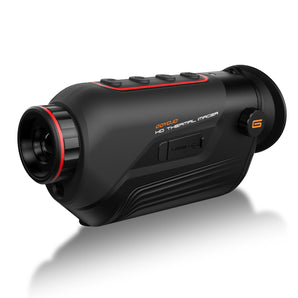
- prefer a 35mm / 4× configuration
- want onboard recording
- want replaceable 18650 batteries
You may want a higher-resolution optic if:
- you regularly hunt very large open country
- longer-distance identification is a primary requirement
- you place greater value on native image detail
If long-range detail across open country is the priority, the source’s 384-versus-640 discussion also makes one comparison with the 640×512 GRL635 configuration useful. That higher-resolution option is a different fit, not the main conclusion of Wood’s GRL335 experience.
Current GRL335 Specifications
For current product context, GOYOJO lists the following values for the GRL335 configuration:
| Specification | Current GRL335 listing |
|---|---|
| Thermal sensor | 384×288 VOx, 12μm |
| Thermal sensitivity | NETD <25mK at 25°C, F/1.0 |
| Objective and magnification | 35mm objective; 4× optical; 1×–4× digital zoom |
| Display and refresh | 1024×768 OLED; up to 55Hz |
| Field of view | 6.5° × 4.5° |
| Power | Rechargeable 18650; listed six-to-eight-hour operation |
| Recording and storage | Photo, video, audio, shot-activated recording; 64GB |
| Protection and temperature | IP65; -20°C to 50°C |
| Weight without battery | 553g / 1.22 lb |
| Warranty | Five years |
Final Verdict
Heath Wood’s review found a GRL335 that fit the rhythm of real predator hunting. It detected coyotes beyond 300 yards in open terrain, usually picked them up closer in his Missouri ground, and gave him his most comfortable positive identifications inside 250 yards. He also reported recognizable K9 detail in grass, smooth tracking through brush, simple glove-friendly controls, full-evening cold-weather use, and a zero that checked the same after four hunts.
That experience makes the GRL335 a strong fit for first-time and value-conscious thermal hunters whose terrain resembles fields, farms, rolling ground, and timber edges. Its biggest demonstrated value is not one extreme range figure; it is the combination of usable detail, repeatable setup, practical controls, recording, and session-length power at realistic calling distances. See the current GOYOJO GRL335 configuration, specifications, and availability.
Source and Editorial Disclosure
This article is an original GOYOJO Optics interpretation of Heath Wood’s third-party North American Outdoorsman GRL335 review, using attributed field observations alongside current GOYOJO product information. GOYOJO did not perform the reported third-party testing. Testing conditions, equipment, terrain, weather, and individual results can affect thermal performance. The field observations described here should not be interpreted as universal performance guarantees.