
Introduction
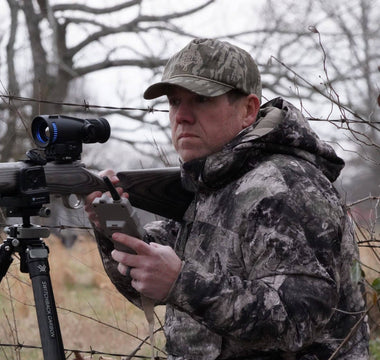
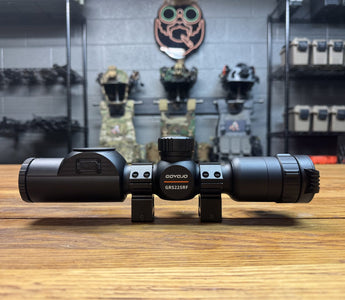
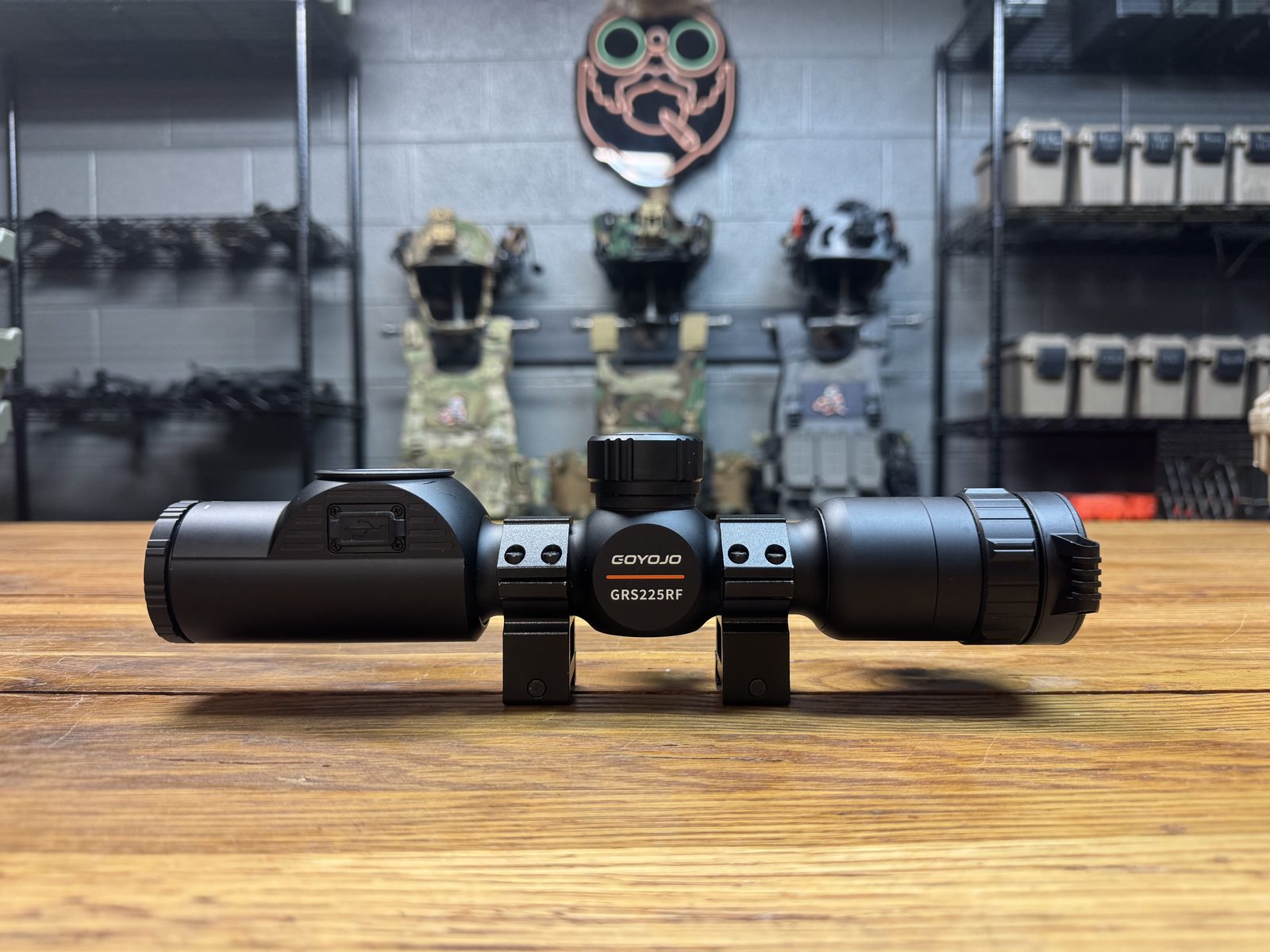
Specifications can describe a thermal optic, but sustained field use shows how its features work together. Gun Made evaluated the GOYOJO GRS225RF over five nights and multiple range days, using it on both .22 LR and 5.56 platforms. Temperatures during the evaluation ranged from 55°F to 95°F, with humidity recorded at 82%.
That test scope makes this independent evaluation useful for readers looking for a GRS225RF thermal scope review grounded in observed use. This article focuses on what the testing actually validated: zero retention, practical laser rangefinder use, straightforward controls, app connectivity, recording transfer, and recognizable thermal detail at measured distances.
Field Test at a Glance
- Test duration: Five nights plus multiple range days
- Round count: Approximately 250 rounds
- Platforms: .22 LR and 5.56 rifles
- Conditions: 55°F–95°F, with humidity recorded at 82%
- Distance observations: Familiar-person identification at 175 yards and heat signatures visible at considerably longer distances
- Functions used: Integrated LRF, onboard controls, photo and video capture, and IR-Tracker V app transfer

What Stood Out in the Test
- Zero retention: The optic maintained zero across the review’s shooting and routine handling sessions.
- Integrated rangefinding: Gun Made used the LRF as a practical part of the field observation workflow.
- App and recording: Photo and video controls worked, with stable app connectivity and successful video transfer.
- Controls and profiles: The quick menu, physical controls, and five zero profiles were straightforward to use.
These were the clearest strengths confirmed during repeated field sessions. The sections below examine each result in context.
As a group, they show how the optic’s core tools worked together rather than as isolated specifications. Range information, stored zero profiles, image capture, and mobile transfer were all available within the same field workflow, giving the reviewer a consistent way to move from observation to recording.
Real-World Thermal Image Performance
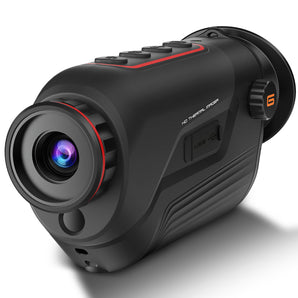
Thermal image quality begins with the information captured by the native sensor. GOYOJO lists the GRS225RF with a 256 × 192 thermal sensor, a 12 μm pixel pitch, a 25 mm objective, and 3.5× base magnification. In Gun Made’s evaluation, a familiar person could be identified confidently at 175 yards, and the image remained useful near 200 yards under the conditions described above.
Thermal signatures remained visible around 500 yards, but at that distance the review showed detection rather than fine identification. Together, these observations connect the official sensor specification with the image detail seen under actual field conditions.

Detection vs. Identification
Thermal-distance claims make more sense when three separate standards are kept clear:
- Detection means noticing that a heat source exists.
- Recognition means judging the target’s general category, such as a person rather than an animal or object.
- Identification means confirming the specific target with enough confidence for the intended task.
GOYOJO’s official detection specification is 1,300 meters for a 1.8 × 0.5-meter target. That figure describes detection, not identification. Gun Made’s familiar-person result addresses identification under the review’s recorded conditions, while the longer-distance signatures illustrate detection.
Target size, weather, humidity, thermal contrast, sensor resolution, magnification, focus, and other environmental factors all influence these distances. Detection specifications and identification observations should therefore be read as complementary measures, not interchangeable range claims.
Rangefinder and Field Controls
Gun Made successfully used the integrated LRF during field testing, including a documented 132.3-yard reading. While the review was not designed as a dedicated maximum-range test, it demonstrated that ranging could be incorporated directly into the reviewer’s field workflow.

The control experience was another tested strength. Frequently used settings were available through a quick menu, and the reviewer found both the menu structure and physical controls easier to navigate than an earlier GOYOJO sample. That matters during low-light observation, when a predictable control sequence can reduce the need to step away from the viewing task.
Dedicated controls handled power, image capture, recording, palette selection, zoom, and rangefinding. The quick menu then provided access to image adjustments without requiring the reviewer to work through the full settings structure each time conditions changed.

App, Recording, and Connectivity
The reviewer connected and used the IR-Tracker V app rather than treating connectivity as a specification-sheet feature. Gun Made found the connection instructions clear, the app easy to navigate, and the connection stable during use. Photo and video controls worked during the evaluation, and recorded video was transferred through the app.
That gave the reviewer a working capture-and-transfer workflow from the optic to the mobile device, making recorded field footage easier to review after a session.
Zero Retention and Shooting Test
After approximately 250 rounds across .22 LR and 5.56 platforms, Gun Made reported no noticeable shift in zero during the review. The optic was also moved among vehicles, cases, and storage without an observed shift. That makes zero retention one of the clearest results from the test.

What to Know About the Test
Digital zoom enlarges the information captured by the native sensor; it does not create additional thermal resolution. Gun Made generally stayed at 4× or below and reported faster detail loss past 5×. This is the expected tradeoff when enlarging a fixed amount of native sensor data.
The reviewer also encountered frequent FFC refresh events without a countdown. Flat-field correction helps recalibrate a thermal image, but the timing of those events affected the viewing rhythm during this evaluation.
Gun Made reported that a standard Energizer CR123 powered the optic but drained quickly during the review; the article did not include a controlled runtime comparison.
The review did not evaluate the ballistic tools or Hot Spot Tracking in depth, and no animals were observed or taken. Those functions therefore remain outside the scope of this field test.
Who Is the GRS225RF Built For?
The findings point toward users who value an integrated LRF, multiple zero profiles, accessible controls, onboard capture, and app-based video transfer in one thermal platform. The 3.5× base magnification and the observed identification result make it especially relevant to buyers planning practical short-to-medium-range observation and shooting tasks.
Multiple zero profiles may also appeal to users who maintain more than one setup and want organized settings available within the optic. As with any mounted sight, zero should be confirmed whenever the optic or mounting arrangement changes.
The native 256 × 192 sensor positions the GRS225RF for practical short-to-medium-range use. The broader GOYOJO thermal optics collection includes additional configurations, while the GOYOJO GRL Series offers higher native-resolution options for buyers who prioritize more image detail at longer distances.
Specifications
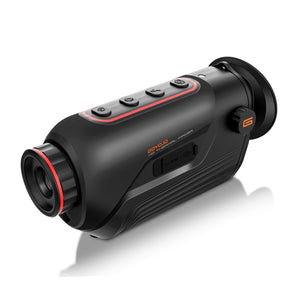
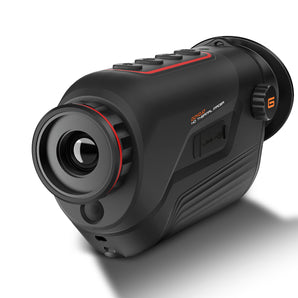
Current GOYOJO specifications for the GRS225RF are listed below. Field observations elsewhere in this article are attributed to Gun Made.
| Specification | GRS225RF |
|---|---|
| Thermal sensor | 256 × 192 |
| Pixel pitch | 12 μm |
| Objective lens | 25 mm |
| Base magnification | 3.5× |
| Display | 1440 × 1080 OLED |
| Thermal sensitivity | NETD <35 mK |
| Detection specification | 1,300 m for a 1.8 × 0.5 m target |
| Ingress protection | IP67 |
| Storage | 32 GB |
| Net weight | ≤760 g / ≤1.68 lb |
| Warranty | 1 year |
What We Learned from the Field Test
Independent testing validated several practical parts of the GRS225RF experience. The optic maintained zero across the review, the integrated LRF fit naturally into the observation workflow, the controls were straightforward, and the app provided stable connectivity and successful video transfer. The test also placed its thermal image performance in a useful short-to-medium-range context.
The native 256 × 192 sensor establishes realistic expectations for available detail, while the integrated feature set brings ranging, recording, and field controls together in one thermal platform.
Explore the GOYOJO GRS225RF
See the full specifications, included features, current pricing, customer reviews, and available accessories for the GRS225RF.
About the Independent Review
This article summarizes and interprets findings from an independent Gun Made GRS225RF field review. GOYOJO did not conduct the test described above.