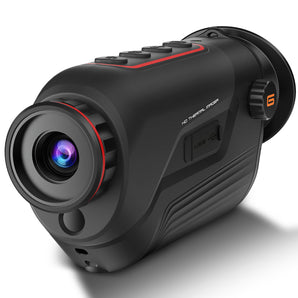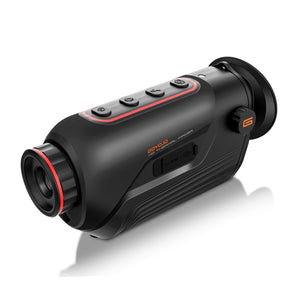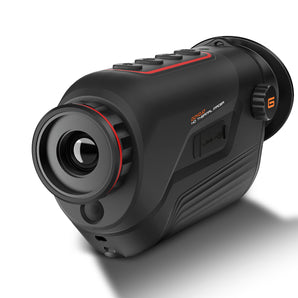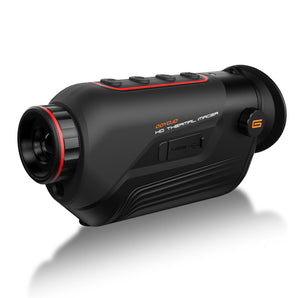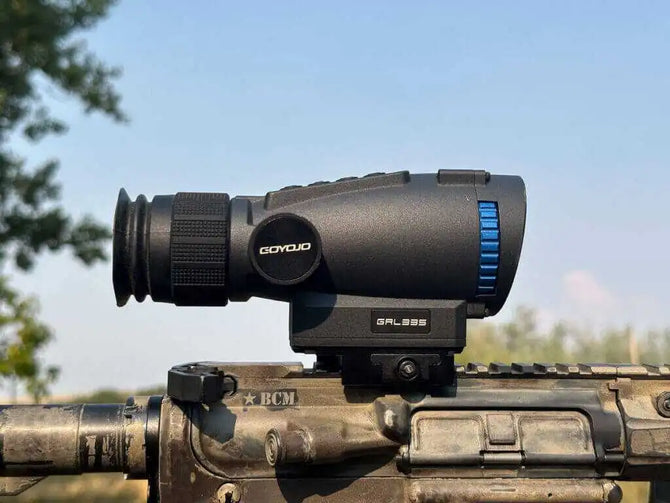

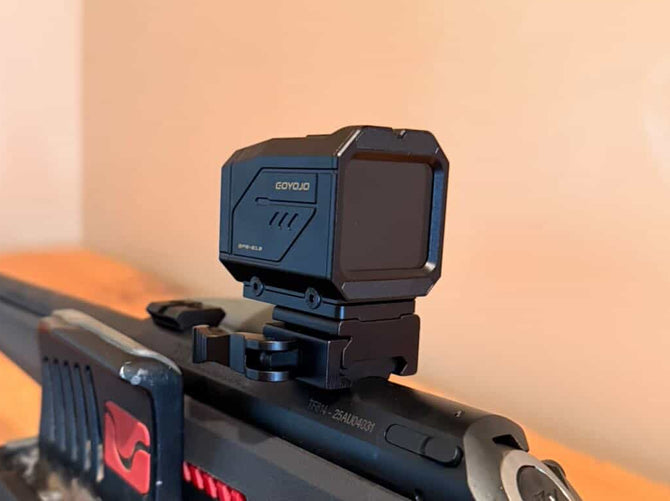
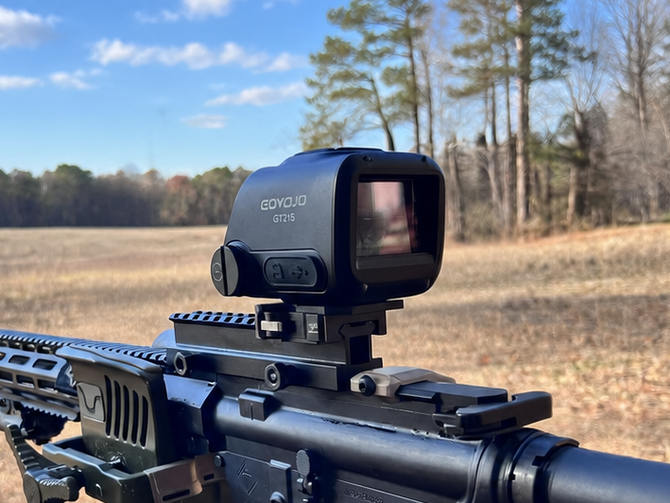
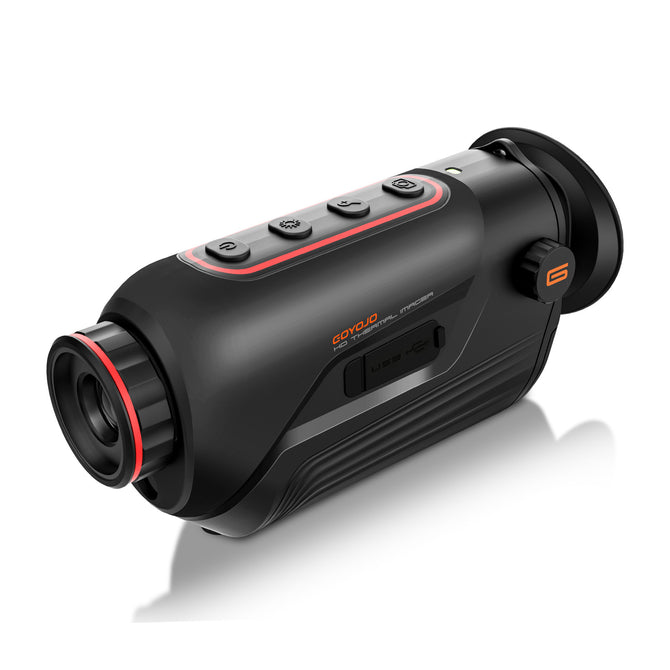
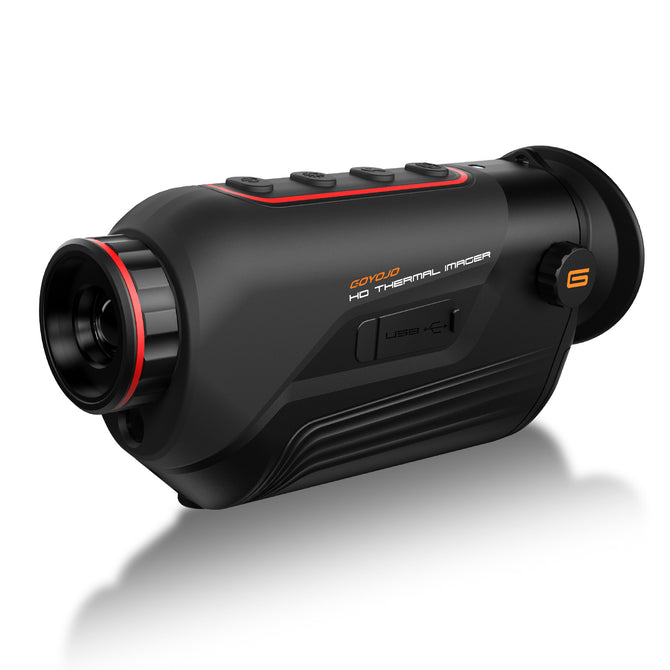
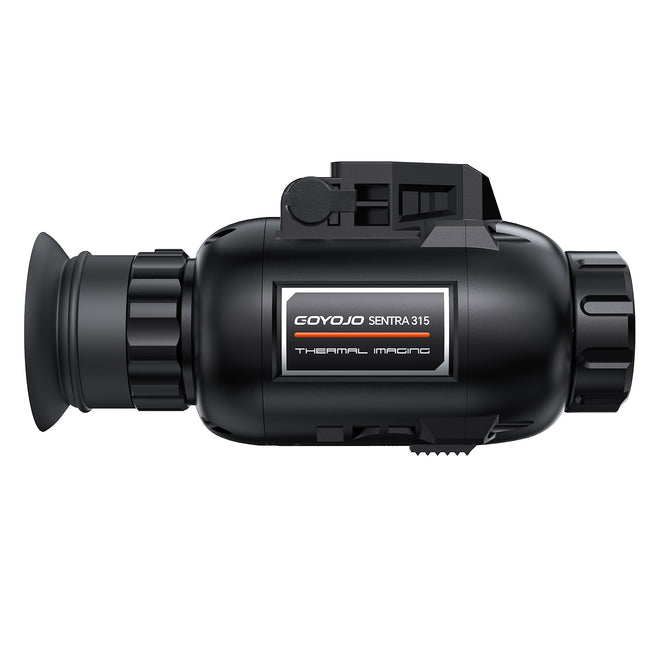
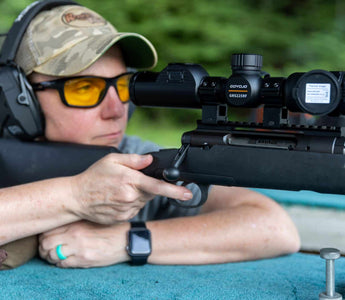
Shopping for a budget thermal scope is mostly about matching the optic to the distances and terrain you actually hunt. The GOYOJO GRS225RF review published by Adrian Jessen at North American Outdoorsman gives buyers a useful look at that question through a range evaluation focused on image quality, identification distance, controls, laser ranging, zeroing, recording, and app features.
This guide reorganizes the reviewer’s findings into a practical buying decision. Test observations are attributed to Jessen and North American Outdoorsman, product specifications are identified as GOYOJO-listed data.
GOYOJO GRS225RF Review at a Glance
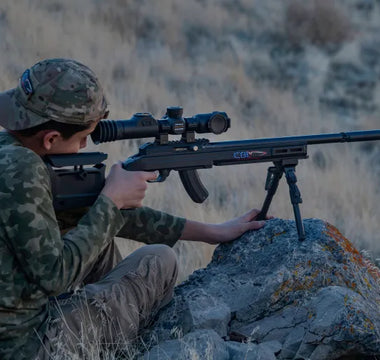
- Best for: Coyote and hog hunters working in small fields, food plots, or wooded properties where most opportunities are inside about 100 yards.
- Standout feature: An integrated laser rangefinder, ballistic tools, recording, and app connectivity in a budget-oriented thermal scope.
- Main limitation: The 256×192 sensor limits fine detail as distance and digital magnification increase.
- Practical identification range: Strongest inside roughly 100 yards; situational from about 100 to 150 yards in the reviewer’s evaluation.
- Bottom line: A feature-rich option for close- to moderate-range use.
How the GRS225RF Was Evaluated
Jessen’s review centered on the questions that matter to a buyer in the field: how image clarity changes with distance, when a heat signature can be identified with confidence, whether the controls work naturally in the dark, and whether features such as the LRF, one-shot zero, recording system, and mobile app add useful value.
The evaluation took place at the range and included targets at several distances. The reviewer also worked through the menu, used the zeroing process, checked the rangefinder against known distances, and tested recording and file-transfer options. The available range did not provide enough distance to fully assess long-range ballistic correction.

Thermal Image Quality and the 256×192 Sensor
The GRS225RF combines a 256×192, 12μm thermal sensor with a 1440×1080 OLED display. Those two numbers describe different parts of the viewing system. The sensor captures the thermal information; the OLED presents that information to the eye.
According to the independent review, movement looked smooth at the listed 50Hz refresh rate, and White Hot and Black Hot were the reviewer’s preferred palettes. The high-resolution OLED helps present the available signal cleanly, but it cannot replace detail that a 256×192 sensor did not capture.
That distinction becomes most visible with digital zoom. Magnification can make a heat signature larger on the display, but it does not add new sensor data. Jessen reported that the image became less defined at longer distances as the existing pixels were enlarged.
Is a 256×192 thermal sensor enough? For buyers whose typical identification and shot opportunities are relatively close, it can be. For large fields or routine identification several hundred yards away, a higher-resolution sensor is the more suitable investment.
How Far Can the GRS225RF Identify an Animal?
Short answer: In the reviewer’s range evaluation, identification confidence was strongest inside approximately 100 yards, became situational between about 100 and 150 yards, and declined beyond 150 yards.
Thermal buyers should separate three different ideas. Detection means seeing that a heat source is present. Recognition means understanding that the heat source is probably an animal. Identification means determining what the animal is with enough confidence to make a safe and legal decision.
Inside approximately 100 yards
This was the GRS225RF’s strongest zone in the review. Jessen reported good confidence in identifying an animal and making an appropriate decision at these closer distances.
Approximately 100–150 yards
Identification was more dependent on the situation. Movement, viewing time, target angle, background, and the observer’s familiarity with the animal could all help or limit confidence.
Beyond approximately 150 yards
The optic remained useful for locating heat, scanning, and ranging, but the reviewer found it increasingly difficult to rely on the image for positive identification. At roughly 150 to 200 yards, added digital zoom made the image larger without revealing more true detail.
These distance bands reflect the reviewer’s conditions during that evaluation. They are a useful buying reference, not a fixed performance boundary for every property or night.
Laser Rangefinder, One-Shot Zero, and Ballistic Features
The integrated LRF is the feature that most clearly separates the GRS225RF from many basic entry-level thermals. During the range evaluation, it returned expected readings on targets at known distances. The review did not attempt to validate the full manufacturer-listed 1,000-meter ranging limit, but the results supported its practical use at the distances available.
Jessen also found the one-shot zero process easy to understand. After firing, the user freezes the thermal image and moves the reticle to the point of impact. The reviewer used a larger hand warmer as the thermal target and suggested that a smaller, sharper heat source would make precise adjustment even easier.
The ballistic calculator can adjust the aiming point using saved rifle and ammunition information. Because the test range was limited, the reviewer could not fully evaluate ballistic correction over longer distances. Buyers should view the system as a valuable available tool while still confirming their own data and zero.

Recording, Storage, and App Connectivity
The GRS225RF records photos and video to 32GB of onboard storage. Recoil Activated Video is designed to capture footage around the recoil event, reducing the chance that a user misses a recording because the record button was never pressed.
The IR-Tracker V app added practical value in the review. Through Wi-Fi, it can mirror the thermal display on a phone or tablet, provide access to controls, and download captured media. A larger screen can also be useful when scanning or reviewing footage with another person.
Direct file transfer was less convenient with the reviewer’s Mac setup. The app offered a workable alternative, but Mac users should expect the mobile workflow to be the easier route for moving clips and photos.

Controls, Battery, and Field Use
The reviewer found the menu intuitive, the silicone buttons easy to locate without looking, and the top dial useful for both navigation and zoom. That control layout reduces the need to search for small buttons while working in the dark.
GOYOJO lists approximately 7-9 hours of operating time from the battery system. Jessen noted that Wi-Fi and other power-intensive settings can shorten runtime, so users planning a long night should manage connectivity accordingly.
The main physical annoyance was the front lens cap, which the reviewer found unusually difficult to open. It is a small issue compared with sensor performance or ranging, but it is worth knowing before heading into the field.

What the Reviewer Liked
- Intuitive menus and tactile controls
- One-shot zero that was easy to work through
- Useful LRF readings on known-distance targets
- Smooth 50Hz image movement
- Recoil Activated Video and built-in storage
- App mirroring, control, and media downloads
- Multiple shooter profiles, reticles, palettes, and picture-in-picture
- A broad feature set for a budget thermal scope
Limitations to Consider
- The 256×192 sensor is the main constraint for longer-range identification.
- Digital zoom becomes increasingly pixelated as magnification rises.
- The front lens cap was difficult to open.
- Direct transfer did not work smoothly with the reviewer’s Mac workflow.
- The one-year warranty is shorter than some buyers may prefer.
- Compatibility should be confirmed before use on heavy-recoiling rifles or slug guns.
Who Should Buy the GOYOJO GRS225RF?
Good fit for
The GRS225RF makes the most sense for buyers who want a thermal scope with a laser rangefinder and modern recording features without moving immediately into a higher-resolution price tier. It is especially well matched to smaller food plots, wooded properties, compact farm fields, and similar terrain where typical coyote or hog hunting opportunities are inside about 100 yards and only occasionally extend toward 150.
It can also make sense for property observation and farm-management work where detecting heat, checking distance, and recording activity are important parts of the job.
Consider a higher-resolution model if
You regularly watch large agricultural fields, hunt open western terrain, or need dependable identification at several hundred yards. In those settings, added sensor resolution will usually deliver more buying value than extra digital magnification.
GOYOJO GRS225RF Specifications
The following are manufacturer-listed specifications from GOYOJO, not measurements produced by the third-party range review.
| Specification | Listed value |
|---|---|
| Sensor | 256×192 VOx, 12μm |
| Thermal sensitivity | NETD <35mK |
| Refresh rate | 50Hz |
| Objective lens | 25mm |
| Magnification | 3.5× optical; 1–8× digital |
| Field of view | 7.0° × 5.3° |
| Display | 1440×1080 OLED |
| Detection range | 1,300m for a 1.8m × 0.5m target |
| Laser rangefinder | 905nm; listed to 1,000m |
| Storage | 32GB |
| Operating time | Approximately 7.9 hours |
| Protection rating | IP67 |
| Maximum recoil listing | 800g/0.4ms |
| Warranty | 1 year |
For current configurations and related models, browse the GOYOJO thermal optics collection.
Final Verdict
This GOYOJO GRS225RF review points to a clear buying decision. The scope offers more than basic thermal imaging: the integrated LRF, one-shot zero, ballistic tools, RAV, onboard storage, and app connection create a useful package for buyers working at close to moderate distances.
The compromise is equally clear. A 256×192 sensor is not intended to provide the identification detail of a higher-resolution thermal at several hundred yards. If your property and typical opportunities keep you mainly inside 100 yards, with occasional use toward 150, the GRS225RF offers a compelling balance of features and cost. If long-range identification is central to your use, compare the higher-resolution GRL series before deciding.
Shop the GRS225RF →
Compare Higher-Resolution Thermal Optics →
Source and Editorial Disclosure
This article was written by the GOYOJO Optics editorial team as a buyer-focused interpretation of third-party testing. The range observations and user-experience findings come from Adrian Jessen’s review published by North American Outdoorsman on July 21, 2026. Technical specifications are from GOYOJO’s official product information.
North American Outdoorsman states that its original article contains affiliate links and that the publication may earn revenue from linked products. Readers can view Adrian Jessen’s complete original review here.
Always positively identify a legal target, follow local hunting and firearm laws, and confirm optic, mount, firearm, ammunition, and recoil compatibility before use.